
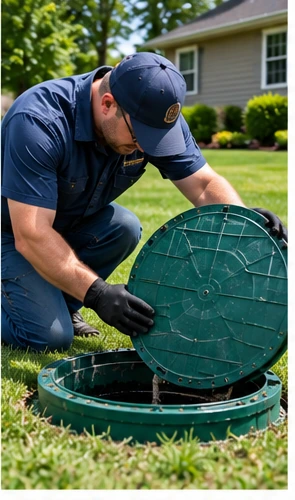
A household may need pumping sooner when the tank is small for the number of occupants, water use is high, a garbage disposal adds solids or previous measurements show rapid accumulation. A larger tank with light, steady use may sometimes go longer, but only system history and measurements can support that decision. Do not wait for a backup to decide the tank is due.
EPA Guidance on Pumping Frequency
The EPA recommends inspecting the average household septic system at least every three years and says household tanks are typically pumped every three to five years. Systems with electrical float switches, pumps or mechanical treatment parts generally need more frequent inspection, often each year. Inspection frequency and pumping frequency are related, but they are not the same task.
A three-year inspection does not automatically mean the tank must be pumped that day. The service provider should examine accessible conditions, measure the solids when the scope includes it and record the findings. Those measurements create a property-specific schedule. If the tank is pumped, keep the date, capacity, solids information and observations with the system records.
Factors That Shorten or Extend the Interval
The tank receives everything sent through the building drains. Occupancy and daily habits therefore matter as much as the calendar. The most useful factors are:
Household size. More occupants usually send more wastewater and solids into the tank.
Tank capacity. A smaller tank reaches critical solids levels sooner under the same use.
Wastewater volume. Frequent laundry, long showers, leaks and concentrated water use increase hydraulic loading.
Garbage-disposal use. Ground food adds material that can accumulate as sludge and scum.
System type. Pumps, filters and alternative treatment units can have separate inspection and maintenance schedules.
Measured history. Previous solids levels and pumping dates show how quickly the specific household fills the tank.
Use Sludge and Scum Measurements
A septic tank holds wastewater long enough for heavier solids to settle as sludge and lighter material to form a scum layer. The outlet must stay protected from both layers. Pumping decisions should therefore consider the distance between accumulated solids and the outlet, not only the liquid level. A normally operating tank is always full of liquid to its working level.
EPA guidance says pumping is appropriate when the bottom of the scum layer is within six inches of the bottom of the outlet, when the top of the sludge layer is within 12 inches of the outlet, or when sludge and scum occupy more than 25 percent of the liquid depth. A professional can measure these layers through safe access. Never enter a septic tank.
Household and Tank Planning Table
Use this table to decide whether the usual range should be reviewed sooner or whether measured history may support a longer interval. It does not replace inspection.
| Planning factor | Effect on the interval | Useful record |
| More occupants or guests | May shorten the interval because wastewater and solids increase. | Occupancy changes and service date |
| Small or unknown tank | Requires earlier verification instead of assuming the tank can wait. | Permit, as-built drawing or verified capacity |
| Garbage disposal | May shorten the interval by adding food solids. | Frequency of use and measured solids |
| Leaks or concentrated water use | Can overload the tank and field even before solids reach a limit. | Water-use changes and repaired leaks |
| Stable measured history | May support a predictable property-specific schedule. | Sludge, scum, capacity and pumping history |
Warning Signs Are Not a Pumping Schedule
Slow drains, gurgling, sewage odors, backup, alarms or wet ground can mean the system already has a problem. They do not prove that routine pumping is the only solution. A building sewer blockage, failed pump, damaged component or overloaded drainfield can produce similar symptoms. Reduce water use during an active problem and have the cause evaluated.
Planned maintenance aims to remove accumulated solids before they reach the outlet or damage downstream components. Waiting for sewage to surface or back up defeats that purpose. Pumping also cannot repair a failed drainfield. If symptoms return soon after a pump-out, the system needs diagnosis rather than another calendar guess.
Create a Property Specific Service Record
Keep one record for the system instead of relying on memory. Include the property address, tank capacity and material if known, tank and lid locations, number of compartments, pumping dates, measured sludge and scum, filter service, accessible-condition notes, repairs, alarms and recommended next inspection date. Attach permits, drawings, invoices and photographs that help locate components safely.
After two or more measured visits, compare the accumulation rate with changes in occupancy and water use. If solids built up faster, shorten the next review. If measurements remained low, ask whether the next interval can be adjusted. The schedule should change when the household, tank, system type or wastewater habits change.
Frequently Asked Questions
Can a small household wait longer than five years?
Possibly, but timing should be based on measurements and system history rather than household size alone. Tank capacity, water use, garbage-disposal use, system condition and the previous solids level still matter. An inspection can show whether waiting is reasonable. A small household should not assume that a leak, unknown tank size or long service gap is safe.
Does a garbage disposal affect pumping frequency?
It can add more solids to the tank, which may increase pumping needs. The EPA advises limiting garbage-disposal use because food waste can accumulate as sludge and scum. Record whether the disposal is used regularly and compare that habit with measured solids during service. Do not use additives as a substitute for inspection or pumping.
Should I wait for slow drains before pumping?
No. Warning signs can indicate a developing blockage or system problem. Planned maintenance is safer than waiting for a backup. If several fixtures slow down, the plumbing gurgles or sewage appears, reduce water use and have the cause evaluated. Pumping may be needed, but diagnosis should determine whether a line, pump, tank component or drainfield is involved.
Northern Kentucky Maintenance Sources
The EPA septic-system care guidance provides the typical pumping range, measurement thresholds and record-keeping guidance. For Boone, Campbell, Grant and Kenton counties, the Northern Kentucky Health Department septic program provides local onsite-system information. The Kentucky Department for Public Health onsite-sewage program provides statewide program and installer information.
Related Septic Services and Guides
Septic Tank Pumping Covington KY - routine pumping and local service overview.
Septic Tank Pumping FAQs - pumping scope, warning signs and service questions.
Septic System Inspection - condition checks and maintenance findings.
Septic Maintenance Inspection - measurement-based maintenance planning.
Septic Maintenance Checklist - records, water use and system care.
Areas We Serve Near Covington - address-level service-area checks.